
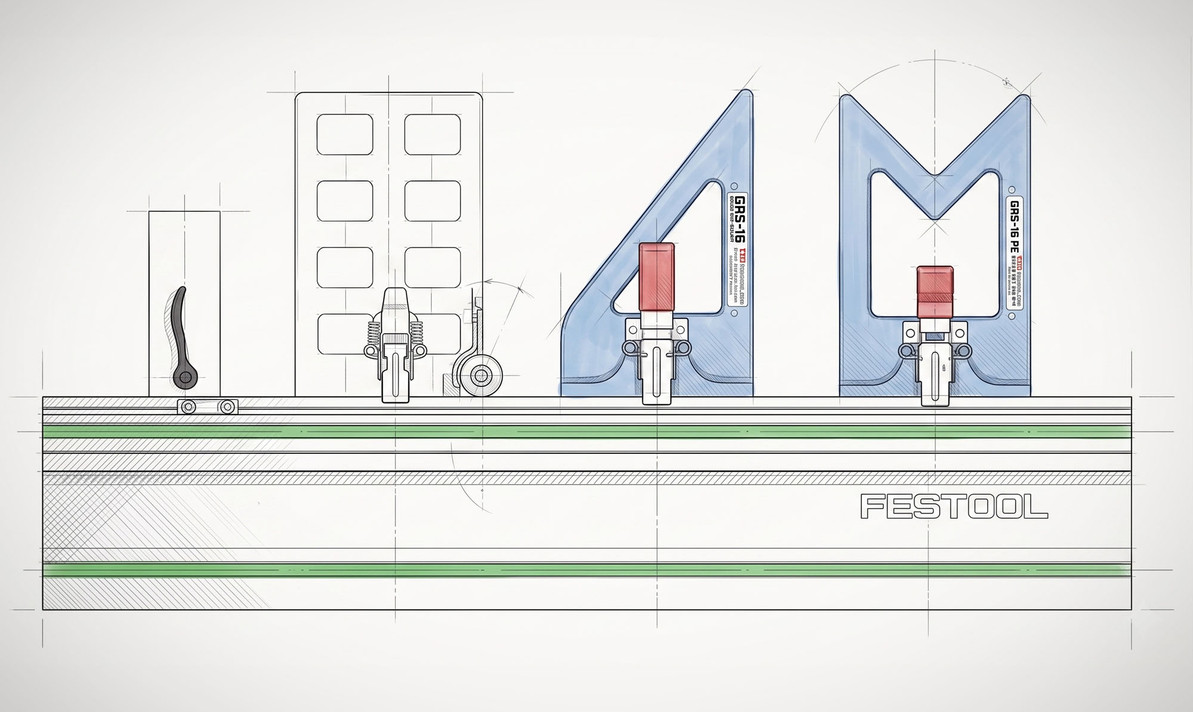
Ten Years of the GRS-16: A Decade of Dead-Square Cuts
Walk into many wood shops today, and you’re likely to find a track saw breaking down sheet goods. Look a little closer, and you may spot a blue accessory clamped to that setup: a GRS-16 guide rail square.
This year marks ten years since the original GRS-16 launched. What began as a simple answer to a frustrating problem has grown into a family of five products backed by four patents. But the story starts much earlier, on a workbench, with a new Festool® track saw and a question that seemed obvious once someone finally asked it.
The Question That Started It All
Hans Friedebach, founder of TSO Products, had been a Festool customer for years before he ever owned a track saw. His first Festool purchase went back to a sander he bought at Seven Corners Hardware in St. Paul.
Years later, while watching his Unisaw sell at auction on a cold Minnesota February day, Hans made himself a vow:
“Never again will I cut plywood panels on a cabinet saw. Never.”
To Hans, the track saw was the obvious replacement. It was safer, more manageable, and better suited to breaking down sheet goods. But for the kind of work he was doing — square cuts, again and again — something was missing.
The standard approach was still a speed square and a couple of clamps.
“I was really put out,” Hans recalls. “What do you mean you have this incredible tool and there’s no out-of-the-box way to square it?”
From Napkin Sketch to First Prototype
That holiday season, Hans brought a few napkin sketches to a machinist friend, Tom, who had bought Hans’ Bridgeport mill years earlier.
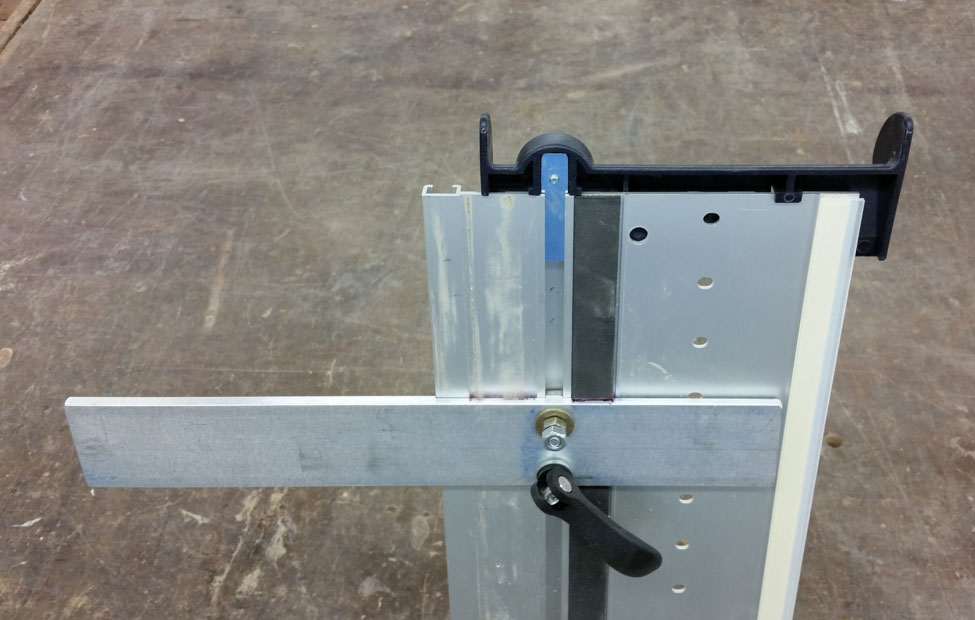
An early proof of concept that confirmed the right idea: a rigid square locked to a guide rail can be useful. It also ruled out T-slot referencing (not precision-machined), attaching from below (out of sight during setup), and cam-locks alone (won’t return to true after a bump).
Tom machined the first prototype from a piece of scrap aluminum on the spot. Hans still has that early concept today — a simple, physical answer to a problem that had been hiding in plain sight.
Before TSO had a website, before the first production GRS-16 existed, the idea was still being worked out at the bench. Early experimental setups used familiar shop tools, including a speed square, as Hans explored what a better solution could look like.
The production GRS-16 launched in the summer of 2016. It was square, dependable, and, just as importantly, simple.
That simplicity was deliberate.
Built to Do One Thing Well
From the beginning, TSO resisted the temptation to add features customers had not asked for: variable-angle adjustment, anti-tip ledges, and other additions that could have made setup slower, more complicated, or easier to compromise.
The goal was not to make the most complicated guide rail accessory. It was to make the most trustworthy one.
At its core, the GRS-16 was built to do one job exceptionally well: deliver dead-square cuts with a track saw.
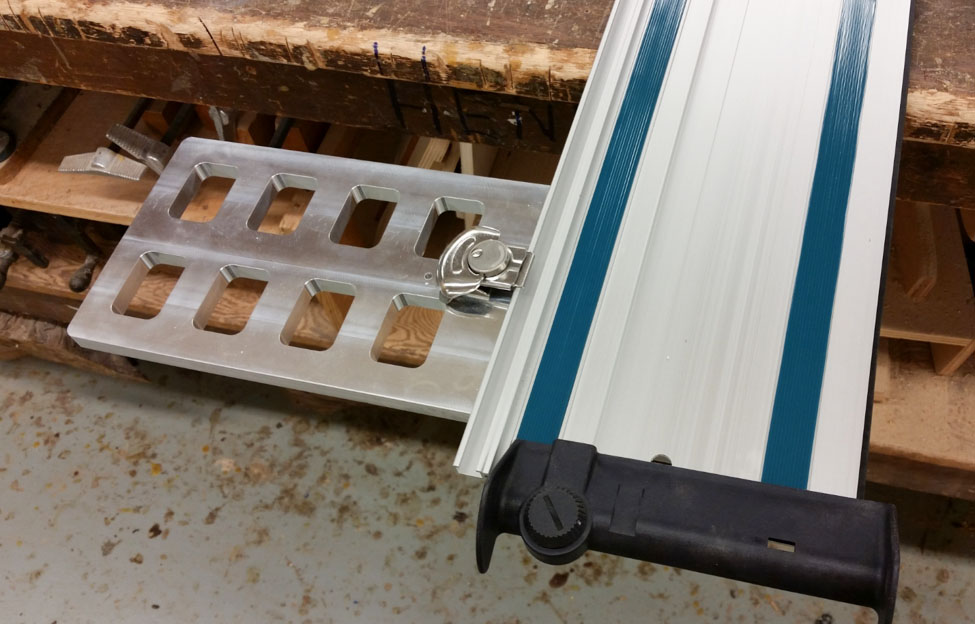
A later prototype that confirmed the rectilinear body proportions worked, while showing that the latch and handle would need significant engineering refinement to hold up to real shop conditions.
For TSO, simplicity was not the absence of engineering. It was the result of careful engineering — knowing what to include, what to leave out, and how to make the tool feel obvious the moment a woodworker put it to use.
Shaped by Woodworkers
Customer input helped shape the GRS-16 from the beginning. Woodworkers did not need a complicated accessory. They needed a reliable reference they could trust, cut after cut.
From that foundation, the GRS-16 family grew.
The PE variant followed after a customer needed to square the top of a panel that had already been scribed to a floor. The K, D, and R variants expanded support to Kreg®, DeWalt®, and RIDGID® track saw systems.
That pattern — listen carefully, solve the real problem, keep the solution focused — became part of TSO’s product development DNA.
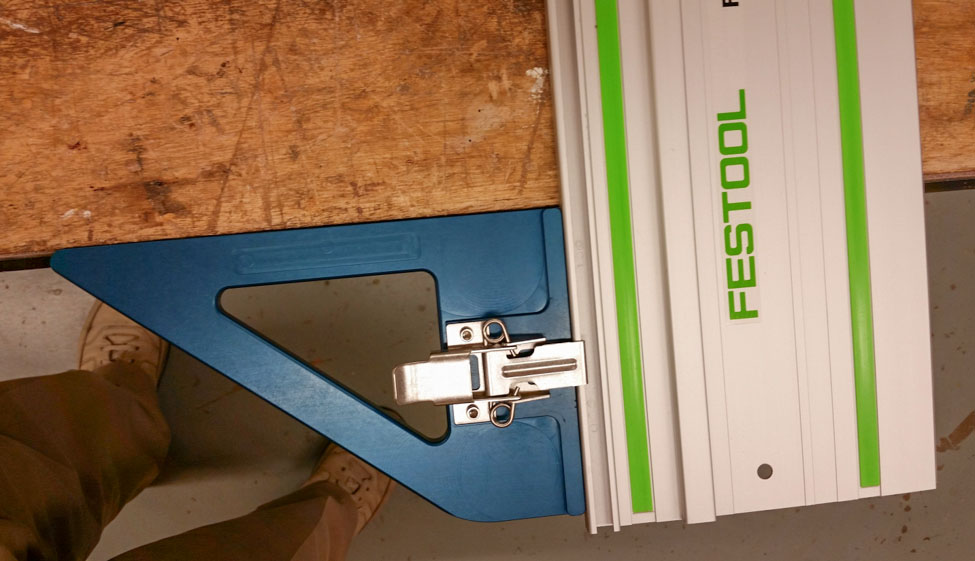
An early GRS-16 fitted with an off-the-shelf commercial draw latch that helped prove the concept was sound, but pointed to the need for a purpose-built design with the power, leverage, and user comfort the production tool would require.
Over the last ten years, woodworkers have helped shape every product in the TSO lineup through forum posts, emails, phone calls, support tickets, and tradeshow conversations. The GRS-16 was the right tool for the moment, but the community helped turn it into a standard.
A Turning Point for TSO
The GRS-16 also marked a turning point for TSO Products itself.
Before then, TSO had been a part-time truck upfitting business. The name originally stood for transport, store, organize. The truck side of the business had plenty of satisfied customers, but the market was too scattered to serve with focus.
The GRS-16 changed that.
It gave TSO a community of woodworkers with a clear need, a shared workflow, and a willingness to give honest feedback. It also gave the company a direction: designing tools that help woodworkers get finish-ready, dimensionally accurate results from the track saw systems they already trust.
The GRS-16 became the starting point for a broader family of TSO products, including the Parallel Guide System Gen 2, designed to work together in the shop and on the jobsite.
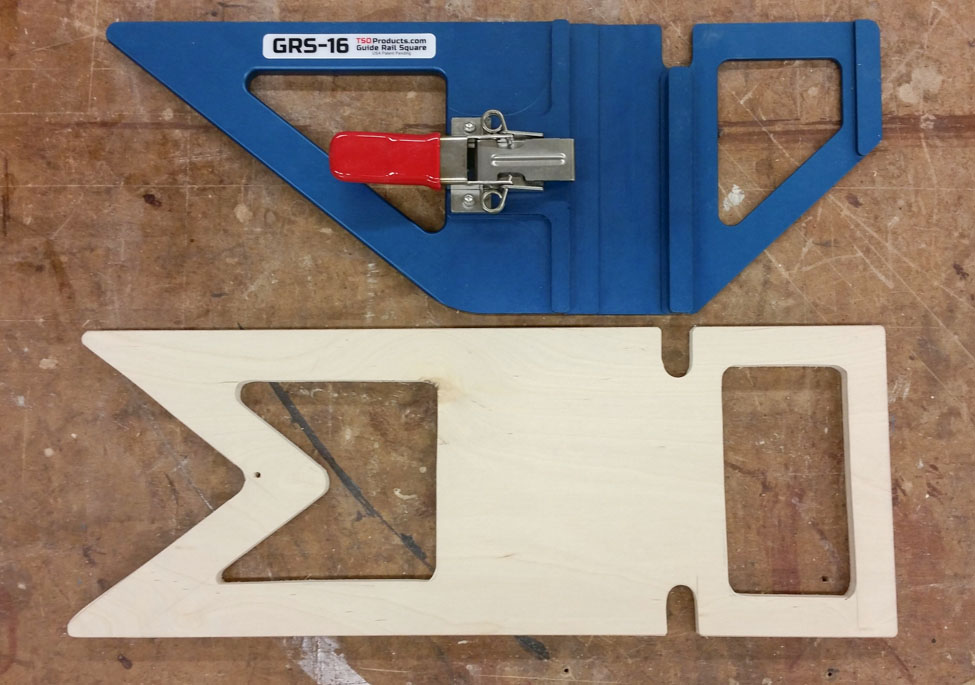
The GRS-16 alongside an early plywood mock-up of what would eventually become the GRS-16 PE for “parallel edge.”
A Decade Later
A decade later, TSO is headquartered in Eagan, Minnesota, where marketing, engineering, and production operate from one building in the shadow of airliners departing nearby MSP airport.
The product catalog has grown. The team has grown. The GRS-16 itself has grown into a family of five products backed by four patents.
But the guiding idea remains the same: study the tools woodworkers already trust, find the gaps that get in the way of better work, and build simple, accurate solutions that feel obvious once they are in your hands.
Today, TSO-brand products are still proudly made in the USA, just like the first GRS-16 that shipped ten years ago.
To everyone who has clamped a GRS-16 to a guide rail and trusted it to do its job: thank you.
As we look ahead, what will not change is the approach that built the first GRS-16: listening closely to woodworkers, solving real shop problems, and building tools that make accurate work simpler.
Recent Posts
-
Fraud Alert: Beware the Fake Website tsotools[.]com
We have become aware of a fraudulent website impersonating TSO Products. Please read this notice car …5th Aug 2026 -
Ten Years of the GRS-16: A Decade of Dead-Square Cuts
Walk into many wood shops today, and you’re likely to find a track saw breaking down sheet goods. Lo …25th Jun 2026 -
How to Use a Wood Router for Clean, Controlled Cuts
A wood router is one of the most versatile tools in any woodworking shop. It edges, joints, shapes, …6th Mar 2026