
Festool Domino Joiner: What You Need to Know Before Buying
The Festool Domino joiner has earned a devoted following—and an equally strong reputation for its price tag. At over $1,000 for the base model, it's not a casual purchase. So the question most woodworkers ask is straightforward: is it actually worth it?
The answer depends on how you work and what you build. This guide breaks down how the Domino functions, where it excels, its limitations, and who benefits most from owning one. Whether you're considering the investment or just curious about what the hype is about, we'll give you the practical information you need to decide for yourself.
What Is the Festool Domino Joiner?
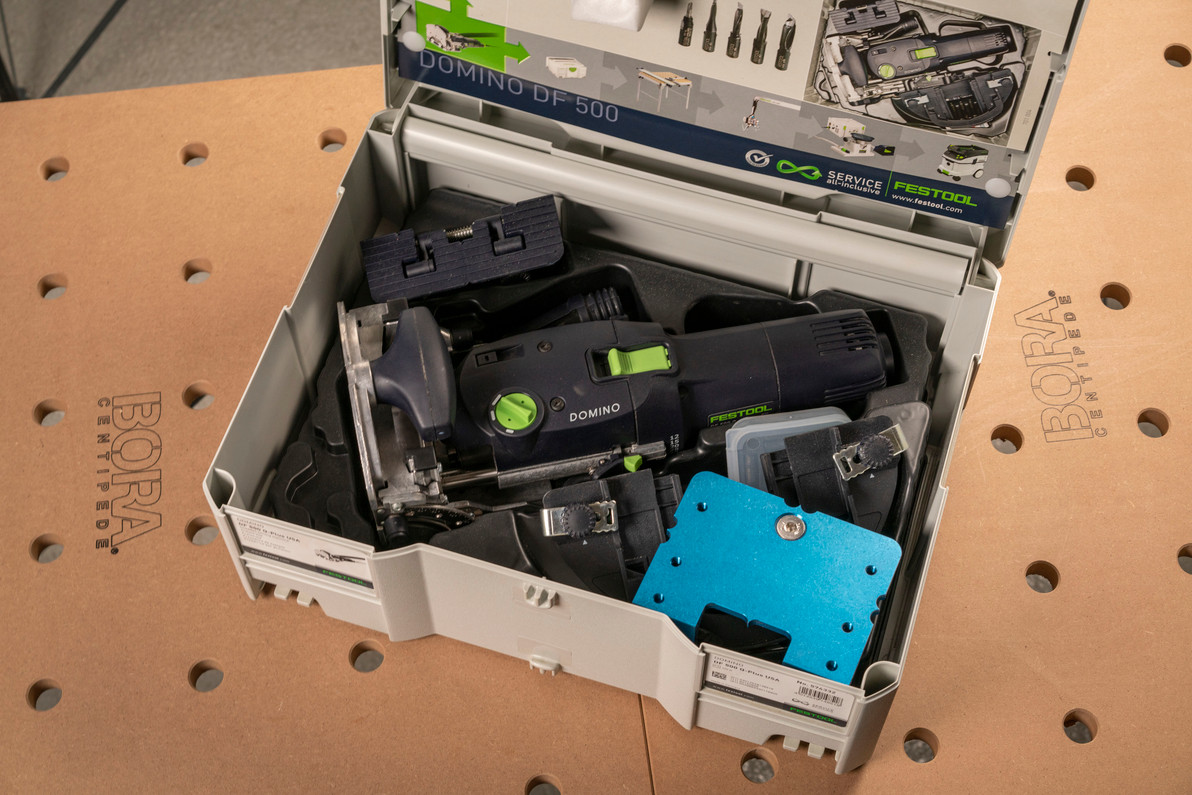
The Domino is a portable power tool designed to cut mortises for loose-tenon joinery. If you're familiar with traditional mortise-and-tenon construction, the concept is similar—but instead of cutting a tenon on the end of one workpiece, you cut matching mortises in both pieces and connect them with a separate tenon.
The tool uses a patented routing motion in which a rotating cutter plunges into the workpiece while moving in a pendulum/oscillating pattern, creating a precise elongated mortise. That mortise is sized to accept Festool DOMINO loose tenons (commonly beech, with Sipo options for exterior work).
Festool offers two models:
- DF 500: The more common choice, designed for furniture-scale work. Commonly used with 4/5/6/8/10 mm cutters/tenons and suits most cabinet, frame, and furniture joinery.
- DF 700 XL: Built for larger joinery. It accepts tenons from 8/10/12/14 mm cutters/tenons and is better suited for doors, timber-frame furniture, bed frames, workbenches, and other heavy-duty applications.
Both machines use the same basic mechanics, but the DF 700 produces larger and deeper mortises and can handle the demands of bigger stock.
How the Domino Compares to Traditional Joinery Methods
The Domino isn't the only way to join wood, and it's worth understanding how it stacks up against the alternatives.
Traditional mortise and tenon
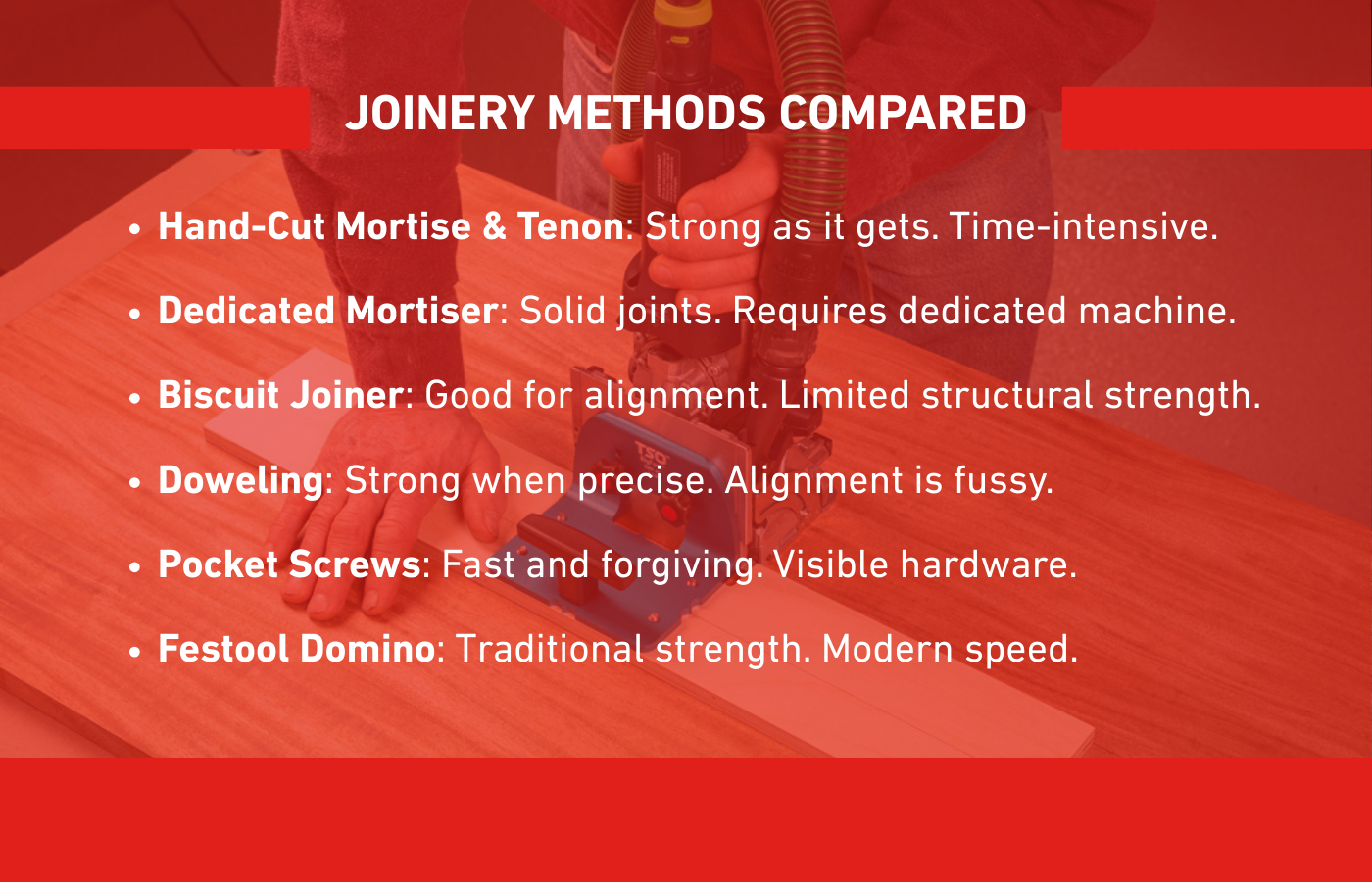
- Remains the benchmark for strong joinery. Cut by hand or with a dedicated mortiser, these joints are rock-solid and time-tested. But they're also time-intensive and require either well-developed hand tool skills or additional machinery. For one-off pieces or traditional work, the effort is often worthwhile. For production or efficiency-focused shops, it can become a bottleneck.
Biscuit joiners
- Offers speed and simplicity, but the joints themselves provide limited structural strength. Biscuits work well for alignment during panel glue-ups, but they're not designed to handle the stress of load-bearing connections like leg-to-apron joints.
Doweling
- Produces strong joints when done correctly, but alignment is iffy. Drilling perfectly matched holes in two workpieces, especially on end grain, requires careful setup and often a dedicated jig. Small errors compound quickly.
Pocket screws
- Fast and forgiving, which explains their popularity. But the visible plugs or holes can look out of place in fine furniture, and the mechanical fastener doesn't offer the same long-term stability as a glued wood-to-wood joint.
The Domino occupies a middle ground. It delivers joint strength approaching traditional mortise-and-tenon construction, but with the speed and repeatability of modern portable tools. You're not sacrificing quality for efficiency: you're getting both.
Where the Domino Excels
The Domino earns its keep in applications where speed, strength, and repeatable accuracy matter.
Frame construction is where many woodworkers see the biggest gains. Face frames, door frames, cabinet frames, any project requiring multiple mortise-and-tenon joints benefits from the Domino's quick setup and consistent results. What might take an hour with traditional methods can take minutes.
Leg-to-apron joints on tables, desks, and chairs are another strong suit. These connections need to withstand racking forces over years of use, and loose-tenon joinery handles that stress well. The Domino makes it easy to cut matching mortises in legs and aprons without complex jig setups.
Panel glue-ups gain both alignment and strength. While biscuits help keep boards flush during glue-up, Domino tenons do the same job while adding real structural reinforcement to the joint.
Mitered joints, notoriously difficult to reinforce with other methods, become straightforward. The Domino can plunge into a mitered end, allowing you to add a hidden tenon that keeps the joint tight and aligned.
Production work is where the tool really shines. If you're building multiples of the same piece, the Domino's repeatability eliminates the setup time that slows down batch work. Once your settings are dialed in, every joint comes out identical.
Limitations and Considerations
The Domino does a lot well, but it's not the right tool for every situation or every woodworker.
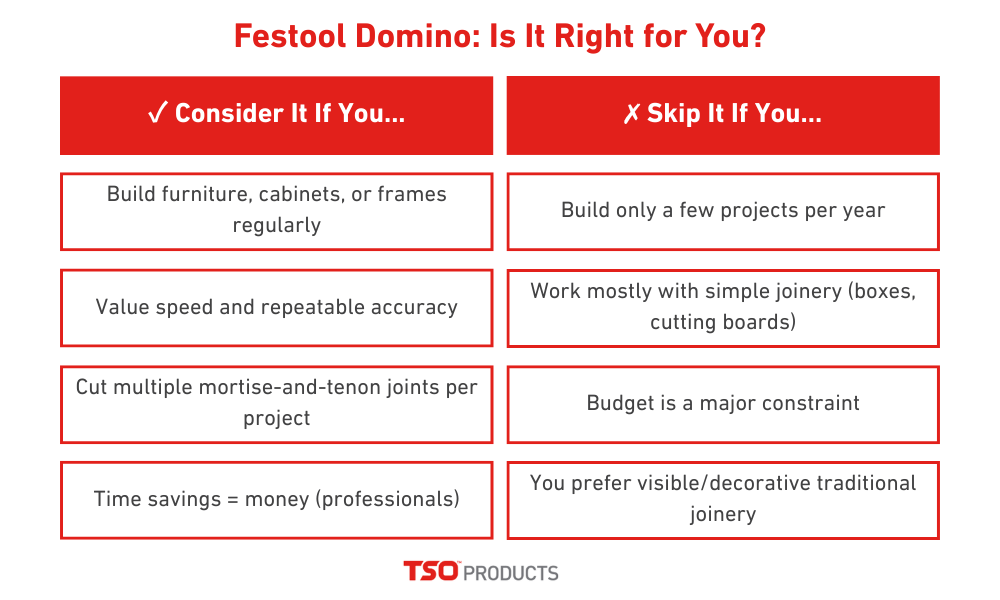
- Cost is the obvious barrier. The DF 500 starts above $1,000, and the DF 700 XL runs several hundred more. Add in tenon stock, additional cutters, and accessories, and the investment grows. This isn't an entry-level tool, and for woodworkers still building out a shop, that money might go further elsewhere.
- You're buying into a proprietary system. The Domino uses Festool's own tenon stock, which means ongoing consumable costs and dependence on availability. Some woodworkers mill their own tenons from solid stock as a workaround, but that adds time and setup. For most users, purchasing Festool's tenons is simply part of the deal.
- It doesn't replace all joinery methods. Through-tenons, exposed joinery, wedged tenons, and other decorative or traditional techniques still require hand work or different tooling. The Domino excels at hidden structural joints, but if your work emphasizes visible joinery as a design element, it won't cover those needs.
- For occasional use, it's overkill. If you build one or two small projects a year, the Domino's speed advantage won't offset its cost. The tool makes sense when you're cutting joints regularly, not when it sits on a shelf between infrequent use.
Is the Domino Worth It?
This is the question, and the honest answer is: it depends on your work.
For hobbyists, the calculation comes down to project volume and complexity. If you're building furniture regularly, the Domino saves real time and improves joint quality. If your projects are simpler or less frequent, other methods will serve you fine at a fraction of the cost.
For professionals, the math usually works out faster. Time is money, and the Domino can cut joinery time dramatically on the kinds of projects that pay the bills. A cabinetmaker or furniture builder who cuts dozens of joints per week will often recoup the investment within a few projects.
Consider your typical workflow. If you're regularly building frames, casework, or furniture with mortise-and-tenon construction, the efficiency gains compound over time. If your work leans toward cutting boards, boxes, or simple joinery, the Domino won't change much for you.
The honest take: The Domino is a luxury, not a necessity. Woodworkers built exceptional furniture for centuries without it. But among those who own one, buyer's remorse is rare. It does one job exceptionally well, and for the right workflow, it becomes one of those tools you wonder how you worked without.
Expanding Your Domino's Capabilities: The BigFoot DBF-45 v2.0
Once you've invested in a Domino, accessories that extend its functionality become easier to justify. The tool is capable out of the box, but a few targeted upgrades can make it even more versatile.
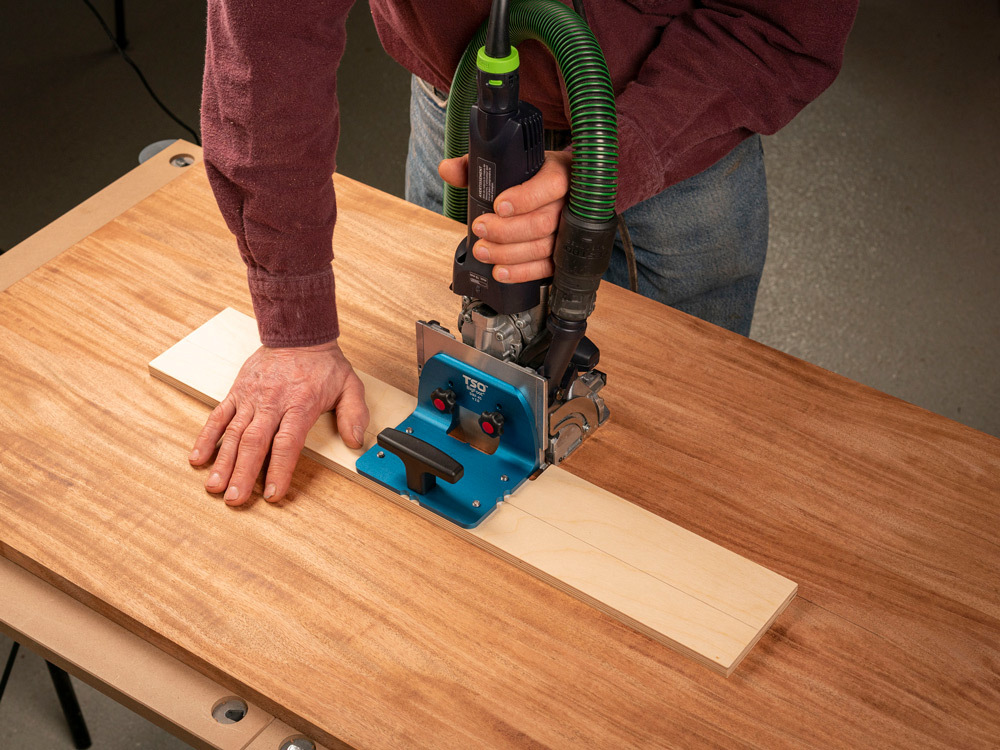
The BigFoot DBF-45 v2.0 base system addresses some common limitations woodworkers encounter with the stock Domino setup. Developed with direct feedback from TSO's user community, it's designed to improve stability, control, and alignment precision.
The larger base footprint provides a more stable platform, especially when working on narrow stock or near edges where the original base can feel tippy. An oversized T-handle gives you better control during plunge cuts. Four parallax-free cursors—three more than the original BigFoot—offer additional alignment options for positioning mortise centerlines exactly where you need them.
The v2.0 version adds mounting points for a shop-built auxiliary fence, with free downloadable plans available for both the DF 500 and DF 700 XL. This addition opens up face mortising on wide panels, a task that's awkward with the Domino alone but becomes fast and precise with the extended fence support.
The BigFoot fits both Domino models and stores inside either systainer, so it doesn't complicate your storage or transport setup.
The system includes the base, comfort grip star knobs, and hardware for auxiliary fence attachment. Full details and downloadable plans are available on the BigFoot DBF-45 v2.0 product page.
Recent Posts
-
How to Use a Wood Router for Clean, Controlled Cuts
A wood router is one of the most versatile tools in any woodworking shop. It edges, joints, shapes, …6th Mar 2026 -
Woodworking Jigs That Improve Accuracy and Repeatability
Every experienced woodworker reaches a point where freehand work and careful measuring hit a ceiling …3rd Mar 2026 -
Festool Domino Accessories: Why the BigFoot Base System Is Worth a Look
The Festool Domino handles edge mortising well out of the box. Face mortising is a different story. …24th Feb 2026