
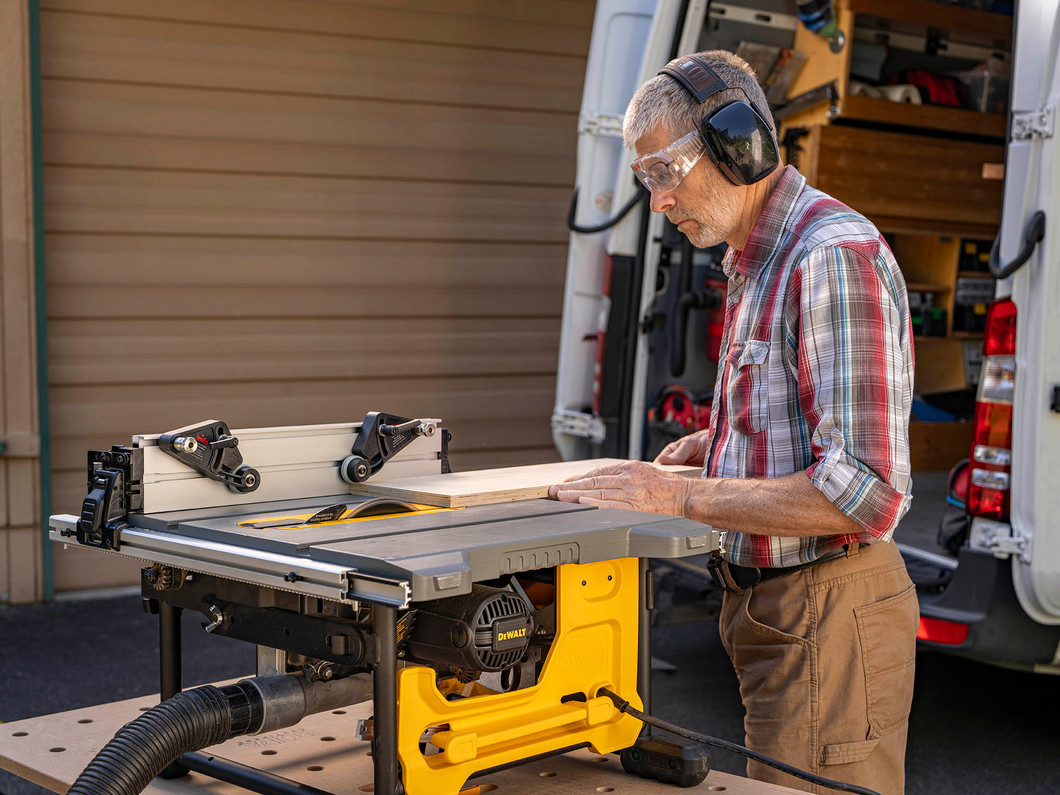
JessEm Stock Guides for DeWalt Table Saws: Precision & Consistency
JessEm Stock Guides give you consistent hold-down pressure, one-way feed control, and include a slight bias directing your workpiece into the fence—features that can significantly reduce kickback risk and improve cut quality on table saws and router tables. They're a common upgrade on cabinet saws, but portable jobsite saw owners have started adapting them to get similar results from a more portable setup.
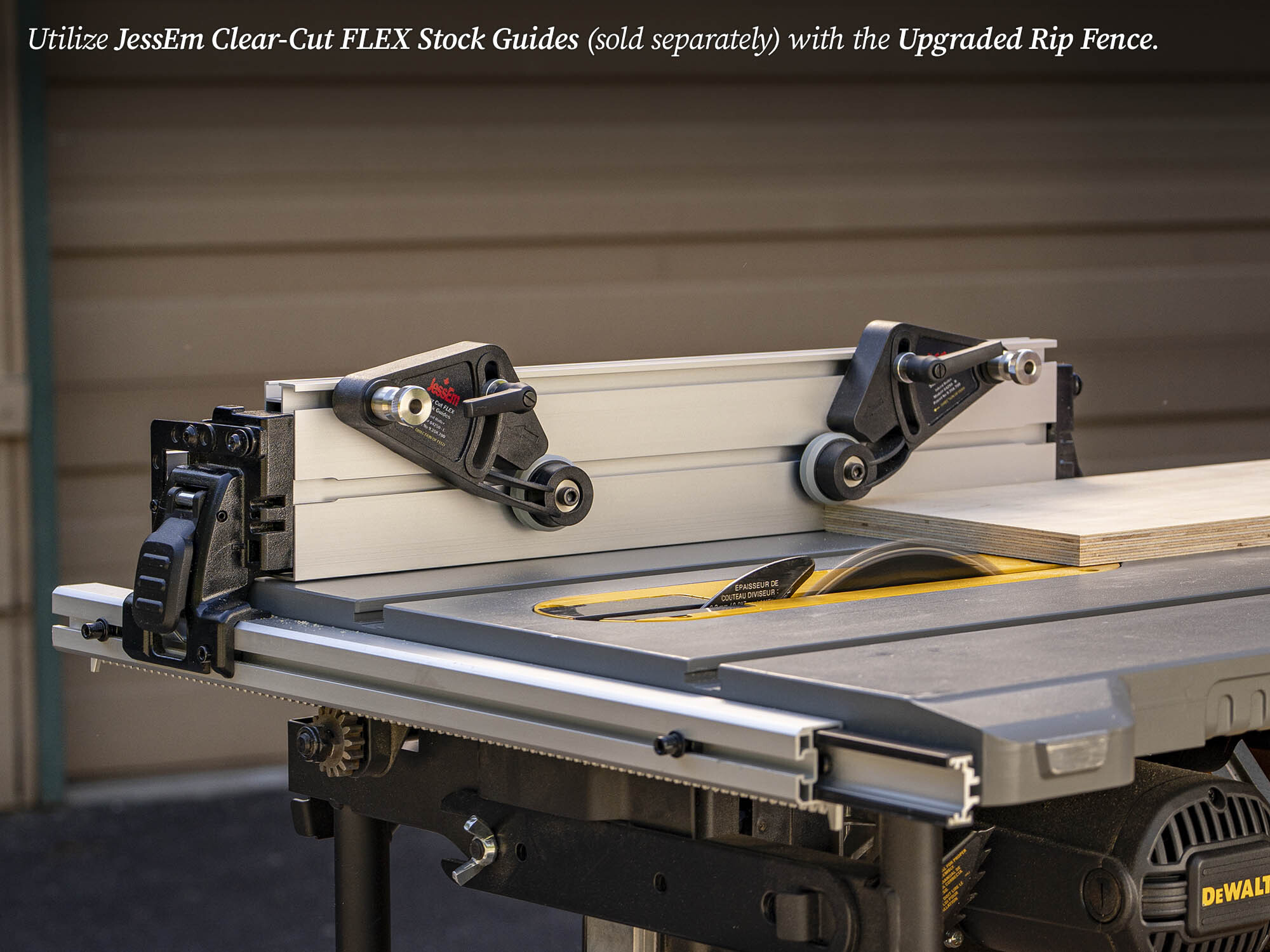
The challenge: The stock fence on many jobsite saws don’t include the T-slots necessary for mounting these stock guides. While you can make an auxiliary fence that accommodates these guides from plywood and secure that to the factory fence, many woodworkers opt to replace the stock fence with an upgraded fence system that includes mounting provisions..
To use a practical example, let’s walk through what's involved in getting JessEm Stock Guides running on a DeWalt jobsite saw—and what to consider before you start.
Why DeWalt Owners Add Stock Guides
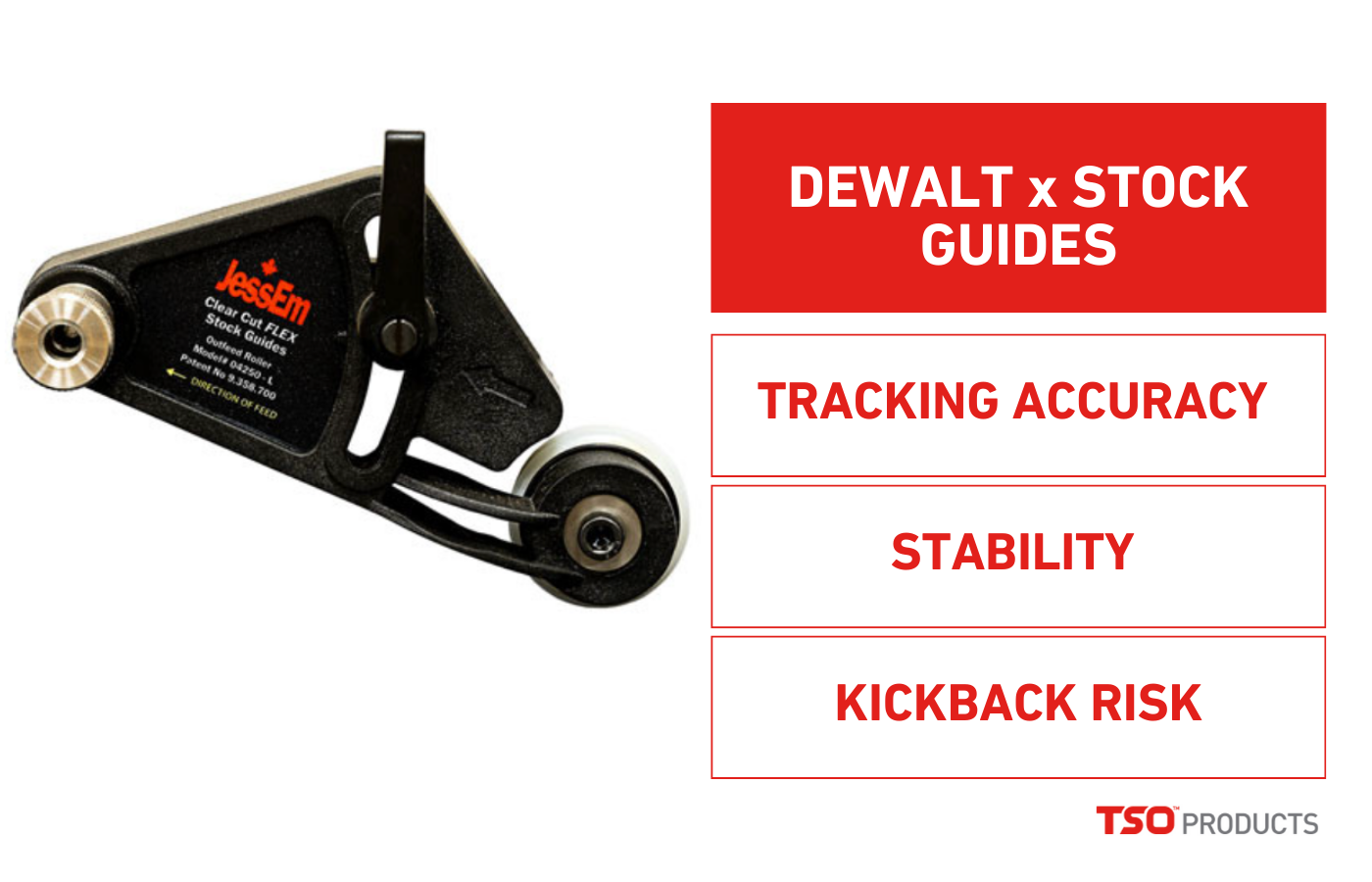
DeWalt jobsite saws—the DWE7485, DW745, DWE7491—are portable and reliable, but their lighter stock fence don't offer the same rigidity or capability you'd get from a cabinet saw. Stock guides help close that gap.
Here's what they address:
- Angled into the fence: The guides keep your workpiece registered tight against the fence throughout the cut, which matters most on long rips or when running heavier stock.
- Kickback risk: One-way rollers resist the workpiece moving backward toward you—one of the leading causes of table saw injuries every year.
- Stability for improved cut quality: By keeping your work tight against the table, the guides reduce vibration and wandering during the cut, which can contribute to poor cut quality.
If your DeWalt is your primary saw and not just a jobsite backup, these are practical upgrades—not luxuries.
Compatibility: Will They Fit a DeWalt Fence?
Not directly. JessEm Stock Guides are designed to mount into fence T-slots—something DeWalt's stock fences don't have. When mounting in a T-slot, you can slide the stock guides along the length of the fence to find the perfect position ahead of, and behind the blade.
To make them work, you have two options:
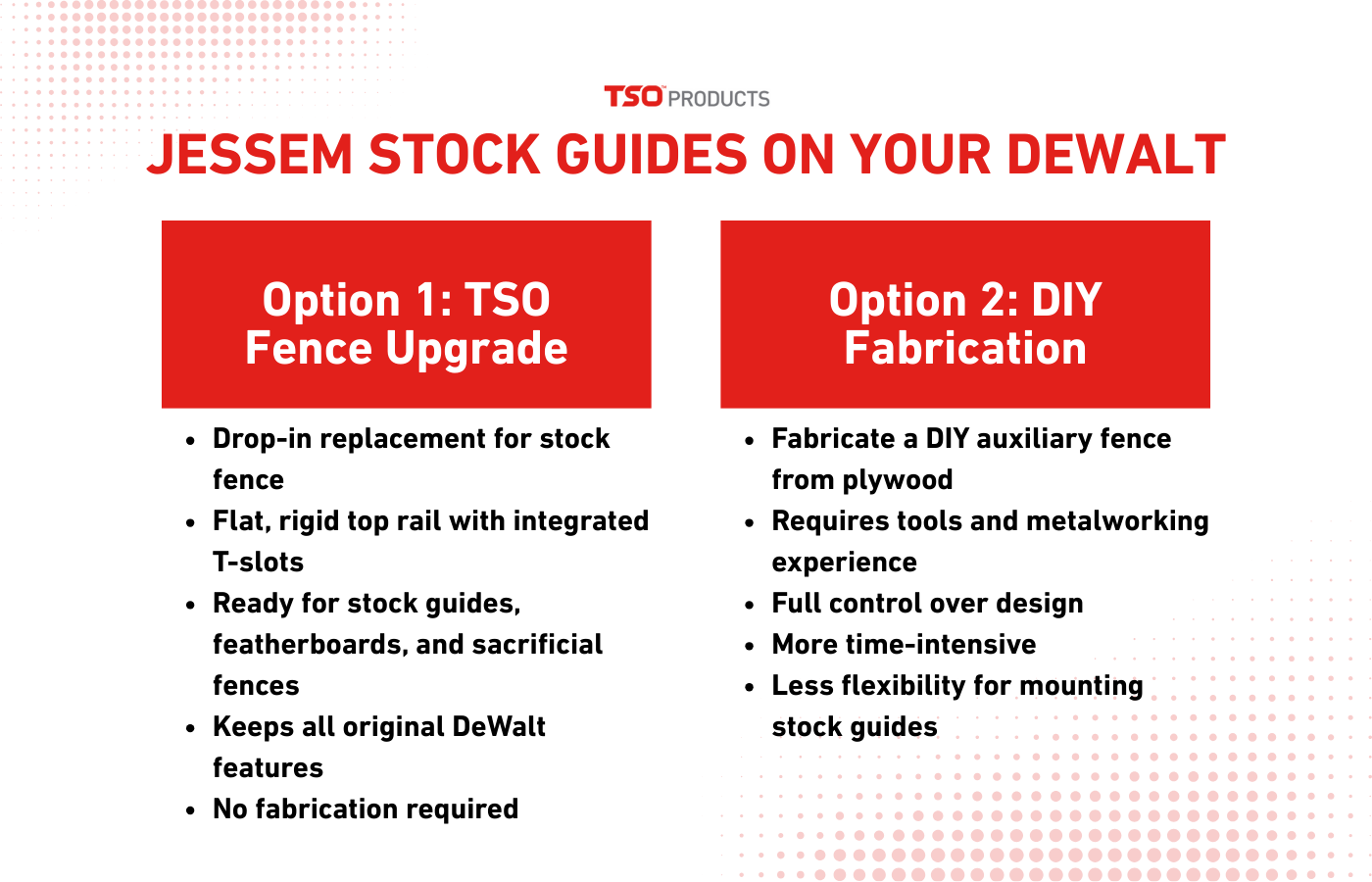
#1 Upgrade to a TSO fence system.
Our DeWalt Fence Upgrades are drop-in replacements for the stock fence, designed with integrated T-slots on the face and top of the fence. That gives you a proper mounting surface for JessEm Stock Guides, featherboards, and sacrificial fences—without fabrication or modification. Installation is straightforward, and you keep all of DeWalt's original features: flip-down auxiliary fence, push-stick storage, and standard fence adjustments.
#2 Fabricate a custom mounting bracket or auxiliary fence.
This is a common route for users who want a DIY solution. It takes more time and doesn’t have the flexibility of a fence with a T-slot, but a DIY auxiliary fence can be made with holes drilled for stock guides at predetermined positions. That auxiliary fence can then be attached to the primary fence by way of fence clamps or double-stick tape.
Either way, the stock DeWalt fence won't get you there without modification.
What to Expect from Stock Guides on a DeWalt Setup
Once properly mounted, JessEm Stock Guides noticeably change how your table saw handles ripping tasks. The difference is most apparent during long rips, repetitive cuts, and when working with stock that's prone to wandering—hardwoods, sheet goods, or anything with irregular grain.
Here's what improves:
- Consistency: The lateral pressure keeps your workpiece registered against the fence from start to finish. No drift, no gradual pull away from the fence mid-cut.
- Cleaner cuts: With the stock held firmly in place, you'll see less blade pressure and fewer burn marks—especially on longer rips where even small movement compounds.
- Reduced vibration: DeWalt's lighter saws can transfer more vibration through the workpiece than a heavier cabinet saw. The guides dampen that, giving you a more stable feed.
- Kickback resistance: The one-way rollers let stock move forward but resist backward motion. Many users who've made this upgrade say their DeWalt now handles daily ripping work they'd previously reserved for a larger saw.
Trade-Offs to Consider
Stock guides aren't without compromise. Before you invest, it's worth understanding what you're giving up and what the upgrade actually costs—in dollars and in workflow.
Advantages:
- Significant improvement in cut quality and consistency
- Measurable reduction in kickback risk
- Well-suited for production-style ripping where you're making the same cut repeatedly
- Performs best when paired with a rigid aftermarket fence—which many DeWalt users upgrade to anyway
Limitations:
- Won't mount directly to a DeWalt fence—you'll need a fence upgrade or a custom mounting solution
- Takes up some real estate on the table, which can limit how close to the blade you can set the fence for very narrow rips
- Adds cost: the guides themselves plus any fence modification or replacement
For hobbyists doing occasional rip cuts, the investment may not pencil out. But for users running their DeWalt as a primary shop saw—or doing any kind of volume work—the gains in control, repeatability, and safety are hard to match with other accessories.
Alternatives Worth Knowing About
JessEm Stock Guides aren't the only feed control option, and depending on your work, something simpler might make sense—at least as a starting point.
- Featherboards: Provide lateral pressure and are easy to reposition. They don't offer one-way feed resistance, so kickback protection is limited. And they often need to be frequently repositioned depending on the size of your workpiece. You might also find that the location of the miter tracks on your table saw (where featherboards frequently mount) don’t always allow for proper positioning of the featherboard depending, again depending on the size of your workpiece and fence position.
- Push blocks (GRR-RIPPER, etc.): Great for hand control and keeping fingers away from the blade. They're operator-dependent, though—your feed pressure is only as consistent as your technique.
- Track saw setups: For sheet goods, a track saw may be a better solution altogether, especially for breaking down full sheets before moving to the table saw.
These tools all solve real problems, and many woodworkers use them alongside stock guides rather than instead of them. But none deliver the combination of lateral pressure, downward hold, and anti-kickback feed resistance that JessEm guides provide. If consistent, controlled
ripping is the goal, stock guides are purpose-built for that job.
The Fence Makes the Difference
If you’re interested in adding capability to your table saw–whether a jobsite saw or full-size cabinet saw–consider JessEm Stock Guides. We carry both the JessEm Stock Guides and the fence systems that make them perform as intended. If you're planning this upgrade, starting with the right fence saves time, avoids rework, and gets you to accurate, repeatable cuts faster.
Recent Posts
-
How to Use a Wood Router for Clean, Controlled Cuts
A wood router is one of the most versatile tools in any woodworking shop. It edges, joints, shapes, …6th Mar 2026 -
Woodworking Jigs That Improve Accuracy and Repeatability
Every experienced woodworker reaches a point where freehand work and careful measuring hit a ceiling …3rd Mar 2026 -
Festool Domino Accessories: Why the BigFoot Base System Is Worth a Look
The Festool Domino handles edge mortising well out of the box. Face mortising is a different story. …24th Feb 2026